China’s aluminum casement window manufacturers serve residential, commercial, and renovation projects worldwide. Their factories produce systems with different profiles, glazing options, finishes, and hardware configurations. For buyers, the challenge is not finding a supplier. It is identifying one that can deliver stable quality at scale.
This guide examines how experienced manufacturers develop Aluminum Casement Windows for different climates and building needs. It considers aluminum alloy selection, thermal-break design, drainage paths, air seals, hinges, handles, and glass performance. These details affect comfort, durability, maintenance, and long-term operating costs. A well-made window should open smoothly, close tightly, and resist water during heavy rain. Small details matter.
Factory experience also deserves careful review. Reliable manufacturers usually provide technical drawings, sample testing, production records, and clear quality-control procedures. Independent inspection can add confidence before shipment. However, certificates alone are not enough. Installation quality, site measurements, packaging, and after-sales support can change the final result. This point is often underestimated.
The article compares leading China-based manufacturers through practical factors, including customization ability, production capacity, export experience, material consistency, and communication. It also considers whether a supplier can solve problems after the first order. No manufacturer is perfect. Even strong suppliers may have gaps in lead times, documentation, or regional compliance knowledge. Honest evaluation is essential.
For architects, contractors, distributors, and homeowners, the goal is a dependable purchasing decision. The right partner should combine engineering knowledge with transparent service. Performance should be verified, not simply promised.
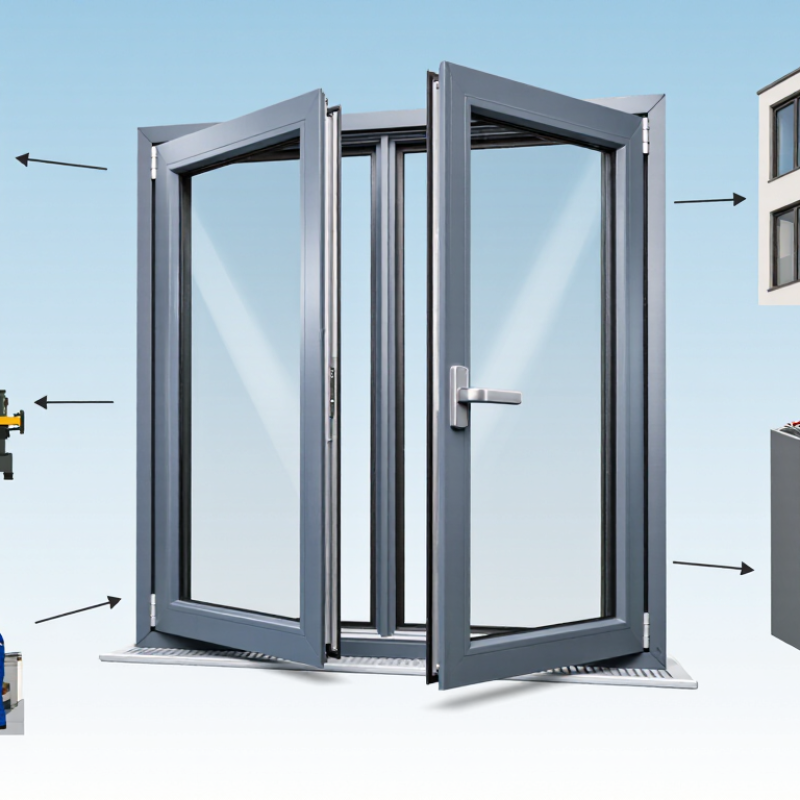
Aluminum casement windows are side-hinged units that open outward with a crank, handle, or friction stay. Unlike sliding windows, their sash moves away from the frame. This creates a broad, unobstructed opening for ventilation and cleaning. A practical distinction. Many models use thermal breaks, insulated glass, and compression seals. Thermal breaks reduce conductive heat transfer through the metal frame. However, they do not make every installation energy efficient. Glass specification, spacer design, drainage, and installation quality remain critical.
The International Energy Agency reported that buildings consumed about 30% of global final energy in 2022. This context makes frame and glass performance important. According to the U.S. Department of Energy, windows can account for 25–30% of residential heating and cooling energy use. NFRC evaluation adds measurable criteria, including U-factor, solar heat-gain coefficient, and air leakage. These values are more useful than attractive frame finishes alone.
From a manufacturing perspective, reliable casement windows need straight profiles, controlled corner joints, and tested hardware. Installers should check the opening, sill slope, anchors, and perimeter sealing before adjustment. Small errors can cause rattling, water entry, or a stiff handle. That is where specifications often look better than reality. Aluminum has a weakness. Without an effective thermal barrier, its high conductivity can create interior condensation in cold conditions. Buyers should compare certified test results, installation details, and warranty terms before selecting a manufacturer. Field performance is never automatic.
Aluminum casement windows are hinged windows that open outward from the side. Their frames are commonly made from 6063 aluminum alloy because it offers good extrudability, corrosion resistance, and surface finishing performance. The chart shows selected maximum alloying-element limits for 6063 aluminum by mass, based on ASTM B221 reference specifications.
Note: The values represent maximum composition limits in percent by mass. Aluminum makes up the balance, and exact requirements may vary according to the applicable material standard and product specification.
China’s aluminum casement window industry benefits from a deep materials and processing base. The International Aluminium Institute reported that China produced about 41.6 million tonnes of primary aluminum in 2023, nearly 60% of global output. This scale supports competitive extrusion, powder coating, thermal-break assembly, and hardware sourcing.
Precision matters. High-quality manufacturers use polyamide thermal barriers, multi-chamber profiles, EPDM seals, and stainless-steel fasteners. These details reduce heat transfer and improve resistance to rain and coastal corrosion.
China’s GB/T 8478-2020 standard covers key performance areas, including air tightness, water tightness, and wind pressure resistance. Serious factories should provide test records, material certificates, and production traceability.
Real projects reveal more than brochures. A well-made casement sash should open smoothly, close evenly, and maintain a consistent seal around the frame. Many suppliers now combine CNC machining with manual inspection, which improves corner accuracy. Still, performance can vary between batches. This is often overlooked. Buyers should review sample windows, coating thickness, glass specifications, and installation details before placing large orders. The industry is advanced, but quality control is not perfectly uniform.
China Top Aluminum Casement Windows Manufacturers
How to Evaluate Chinese Window Manufacturers
A polished showroom proves little. Evaluate the factory behind the product. Ask for the aluminum alloy grade, wall thickness, thermal-break structure, and coating specification. Reliable manufacturers provide traceable test reports, not vague promises. Check air-tightness, water resistance, wind-load, and opening-cycle results. These details matter when windows face heavy rain or strong coastal winds. Request production samples before approving a large order. Inspect corner joints, drainage holes, hinges, locks, and gasket contact. A small mismatch can cause noise, leaks, or difficult operation.
Tips: Visit the factory if possible. Watch one complete assembly process. Compare the sample with the approved drawing. Ask who controls extrusion, coating, glass, and final inspection. Confirm packaging with photos and drop-test records. Keep every specification in writing.
Communication also reveals manufacturing discipline. The sales team should answer technical questions clearly and involve an engineer when needed. Request references from similar projects, preferably with comparable window sizes and climates. Check whether the manufacturer can provide installation guidance and replacement parts. Payment terms deserve attention too; avoid choosing only by the lowest quotation. An unusually cheap offer may hide thinner profiles or weaker hardware. No factory is perfect, including highly experienced suppliers. What matters is whether problems are documented, corrected, and reviewed. I would also allow extra time for sampling, because rushed decisions often become expensive site repairs.
China’s aluminum casement window manufacturers often serve different project categories. Residential suppliers focus on standard sizes, slim frames, and practical ventilation. Their products commonly suit apartments, villas, and small renovations. Factory experience matters here. Accurate corner joints prevent air leakage and uneven sash movement.
Commercial manufacturers usually produce larger casement systems for offices, hotels, and mixed-use buildings. They may offer thermal-break frames, reinforced hinges, multi-point locks, and double or triple glazing. Some factories also support curtain wall coordination. This helps architects match window lines with broader façade designs. However, larger systems require careful structural calculations. A heavy sash can sag when hardware selection is rushed.
Custom engineering manufacturers handle unusual openings, special colors, and demanding weather conditions. They may provide acoustic glazing, concealed drainage, inward-opening designs, or high-performance seals. Coastal projects often need stronger corrosion resistance. Cold regions may require deeper thermal barriers and improved gasket materials. Product specialization should match the site, not only the catalog.
Ask for section drawings, test reports, and installation guidance before comparing prices. Request samples with real corner details. A polished sample can still hide weak drainage design. I have found that small specification gaps create expensive site corrections. Manufacturing quality also depends on extrusion control, powder coating, assembly tolerances, and final inspection. A reliable supplier explains these processes clearly, including what cannot be customized.
Choosing China’s top aluminum casement window manufacturers requires more than comparing prices. Experienced buyers inspect alloy grades, wall thickness, thermal breaks, hardware, and powder coating quality. Reliable manufacturers should provide test reports, factory quality records, and traceable production batches.
Quality standards must match the project’s destination. Ask whether the windows meet relevant requirements such as EN 14351-1, ASTM testing, or local building codes. Testing should cover air leakage, water resistance, wind pressure, and opening-cycle durability. Request recent reports, not generic files. A clear inspection plan can include frame checks, glass measurements, corner joints, and sealant adhesion before shipment.
Customization often includes color, glazing, mosquito screens, handles, drainage paths, and unusual opening sizes. Small details matter. A coastal project may need stronger corrosion protection and stainless-steel hardware. Export preparation also involves accurate packing lists, container loading plans, labeling, and moisture control. Confirm installation instructions and spare hardware before production begins. In my experience, samples reveal weaknesses that drawings hide. One imperfect sample is useful if the supplier explains the cause and corrects it. However, buyers should not accept repeated defects as normal. Factory visits, independent inspections, and documented corrective actions provide stronger evidence than polished sales promises.
| Evaluation Dimension | Typical Specification or Data | Relevant Quality Standard or Test | Customization and Export Considerations |
|---|---|---|---|
| Frame Material | Aluminum alloy profiles commonly use heat-treatable 6000-series alloys, such as 6063, with T5 or T6 temper conditions. | Material certificates should identify alloy grade, temper, chemical composition, and mechanical properties. | Confirm profile wall thickness, thermal-break design, corner strength, and compatibility with the selected hardware and glazing system. |
| Window Configuration | Common options include single casement, French casement, top-hung, fixed-plus-opening combinations, and multi-panel assemblies. | Performance should be evaluated for the complete window unit rather than the frame alone. | Opening direction, handle position, sash size, mullion layout, and installation clearances should be shown on approved shop drawings. |
| Thermal Performance | Thermal-break aluminum systems generally provide better insulation than non-thermal-break systems. Whole-window U-value varies with frame, glass, spacer, size, and configuration. | U-value or U w testing and calculation should follow the destination market’s applicable method, such as ISO or EN procedures. | For cold or hot climates, specify low-emissivity glass, insulated glazing, warm-edge spacers, thermal isolators, and verified whole-window results. |
| Air Permeability | Performance is normally reported by leakage rate at a defined test pressure. Higher classes indicate better resistance to uncontrolled air leakage. | EN 12207 and related EN test methods are commonly used for classification in European projects. | Use continuous gaskets, accurately fabricated corners, proper drainage, and controlled installation tolerances to maintain laboratory performance on site. |
| Watertightness | Watertightness is classified by the pressure level at which water penetration begins during a standardized test. | EN 12208 and EN 1027 are commonly referenced for European testing and classification. | Drainage paths, sill design, weep holes, sealant joints, and external flashing details should match local rainfall and wind exposure. |
| Wind Resistance | Wind performance depends on frame geometry, reinforcement, span, glass weight, fixing points, and building height. | EN 12210 and EN 12211 are commonly used for European wind-load classification and testing. | Provide project wind pressure, exposure category, window dimensions, and fixing details before finalizing profile and glass thickness. |
| Glazing Options | Typical choices include single glazing, double insulating glass units, laminated glass, tempered glass, acoustic glass, and low-emissivity coatings. | Glass selection should comply with the safety-glazing and insulating-glass requirements of the destination market. | Verify glass thickness, edge clearance, spacer type, gas fill, safety location, solar-control requirements, and maximum sash weight. |
| Surface Finish | Common finishes include anodized aluminum, powder coating, and liquid coating. Powder-coating specifications often distinguish standard, enhanced, and high-durability grades. | Finish quality may be assessed using color tolerance, coating thickness, adhesion, gloss, corrosion resistance, and weathering tests. | Specify color reference, gloss level, visible-surface requirements, sample approval, coastal exposure, and protection against damage during transport. |
| Hardware and Security | Casement windows may use multi-point locking systems, friction stays, restrictors, concealed hinges, handles, and child-safety devices. | Hardware should be tested for operating cycles, corrosion resistance, load capacity, and security performance where required. | Confirm hardware finish, handedness, key or non-key locking, replacement availability, and compatibility with local security requirements. |
| Gaskets and Sealants | EPDM, silicone, or other application-specific sealing materials may be used for glazing and weather seals. | Material compatibility, aging resistance, compression, and temperature range should be verified through technical documentation. | For hot, cold, humid, or coastal environments, request compatible sealants and installation instructions for the complete window system. |
| Quality Management | A documented quality-management system supports traceability, process control, inspection records, and corrective actions. | ISO 9001 certification may be requested as evidence of a quality-management framework, but it does not replace product testing. | Request inspection plans, material certificates, production photographs, test reports, batch identification, and pre-shipment inspection procedures. |
| European Market Compliance | External windows and doors intended for use in European construction projects may require performance assessment under the applicable harmonized product requirements. | EN 14351-1 is commonly associated with windows and external pedestrian doorsets; the applicable conformity route depends on the product and market rules. | Confirm declaration, labeling, performance documentation, safety-glazing requirements, and any country-specific building regulations before shipment. |
| North American Market Compliance | Projects may specify performance grades, design pressures, forced-entry resistance, energy performance, and regional building-code requirements. | Applicable requirements may reference local building codes and recognized window performance standards, depending on the project jurisdiction. | Ask for independently verified test reports using the exact product configuration, including size, glass, hardware, and reinforcement details. |
| Acoustic Performance | Sound insulation depends on glass thickness, laminated interlayers, air-space width, frame sealing, and installation quality. | Acoustic ratings should be based on laboratory test results for the complete window assembly. | Specify target sound-reduction values, dominant noise frequencies, road or airport exposure, and acceptable glass thickness and weight. |
| Size and Design Flexibility | Maximum practical sash dimensions and weights vary by profile system, glass package, hardware, wind load, and opening type. | Structural calculations and hardware load limits should be checked before mass production. | Custom options may include large sash formats, narrow sightlines, curved elements, integrated screens, special colors, and non-standard grids. |
| Packaging and Container Loading | Windows are commonly protected with corner guards, foam or film, separators, moisture control, and reinforced crates or pallets. | Packaging should prevent abrasion, glass breakage, deformation, and movement during handling and ocean transport. | Confirm packing method, package dimensions, gross weight, container utilization, loading photographs, and unloading equipment requirements. |
| Export Documentation | Typical documents include commercial invoice, packing list, transport document, certificate of origin when required, and product technical files. | Documentation should match the purchase contract, customs classification, destination regulations, and agreed delivery terms. | Agree on Incoterms, port of loading, insurance responsibility, HS classification, labeling language, and document submission deadlines. |
| Pre-Shipment Inspection | Inspection may cover dimensions, profile finish, glass, hardware operation, color, accessories, packaging, and quantities. | Acceptance criteria should be defined in an approved specification, drawing set, sample, or inspection checklist. | Use approved samples and signed drawings as the reference for production; record nonconformities and corrective actions before dispatch. |
| Warranty and After-Sales Support | Warranty coverage should clearly separate frames, finish, glass, hardware, seals, and installation-related issues. | Warranty terms should define coverage period, exclusions, claim evidence, response time, and replacement responsibilities. | Confirm spare-parts availability, technical support, installation guidance, replacement-glass procedures, and long-term hardware compatibility. |
Its large aluminum industry supports extrusion, coating, thermal-break assembly, and hardware sourcing. Costs can be competitive. Quality still varies between factories.
Polyamide thermal barriers reduce heat transfer through the frame. EPDM seals help resist air and water leakage. Stainless-steel fasteners improve durability in humid environments.
Check whether the sash opens smoothly and closes evenly. Inspect the continuous seal around the frame. Review corner joints, coating thickness, glass details, and drainage paths. Small defects matter.
Residential suppliers usually offer standard sizes, slim frames, and practical ventilation. These windows can suit apartments, villas, and small renovations. Accurate corner joints help prevent air leakage and uneven movement.
Larger windows may require reinforced hinges, multi-point locks, and double or triple glazing. Structural calculations are important because heavy sashes can sag. Hardware selection should not be rushed.
Custom engineering helps with unusual openings, special colors, concealed drainage, and difficult weather conditions. Coastal sites may need stronger corrosion protection. Cold regions often need deeper thermal barriers and improved gaskets. The site should guide customization.
Request section drawings, recent test reports, material certificates, and production records. Testing should cover air leakage, water resistance, wind pressure, and opening durability. Generic files are not enough.
Ask for samples showing real corners, glazing, seals, handles, and drainage details. Compare the sample with the technical drawings. Samples tell the truth. Still, one sample cannot represent every production batch.
Confirm packing lists, container loading plans, labels, moisture control, and installation instructions. Request spare hardware and clear replacement procedures. Independent inspection can reveal problems before shipment.
Not usually. A low quote may exclude stronger hardware, thicker profiles, better seals, or proper inspection. Compare complete specifications and documented corrections, not polished promises. I would still question my assumptions.
Aluminum Casement Windows are side-hinged window systems that open outward, offering effective ventilation, clear views, and practical operation. China’s aluminum window industry is recognized for its broad manufacturing capacity, advanced production equipment, flexible design capabilities, and competitive supply options. Manufacturers commonly provide thermally broken or standard aluminum frames, insulated glass, powder-coated or anodized finishes, multipoint locking systems, and configurations suited to residential, commercial, and renovation projects.
When evaluating Chinese window manufacturers, buyers should review material quality, fabrication accuracy, testing procedures, production capacity, communication, and after-sales support. Leading suppliers may specialize in energy-efficient systems, large-format windows, customized colors and dimensions, or solutions for demanding climates. It is also important to confirm applicable quality standards, glass specifications, air and water performance, packaging methods, and export documentation. Clear technical drawings, sample approvals, inspection plans, and delivery terms can help ensure that the selected Aluminum Casement Windows meet project requirements safely, consistently, and efficiently.